

 English
 简体中文
 Español
 Deutsch
 Français
 Bahasa Indonesia
 Malaysia
 Português
 Русский язык
 بالعربية
 Kiswahili
 বাংলা
 Technical Considerations for Exposed Roof Waterproofing Using Acrylic Coating
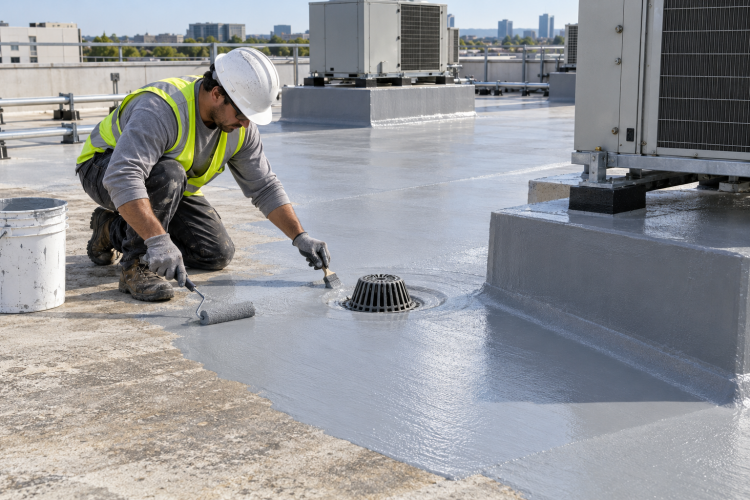
Exposed roof waterproofing systems must withstand direct solar radiation, thermal cycling, rain exposure, and mechanical abrasion without underlying membrane protection. One-component acrylic waterproof coatings are frequently selected for such applications due to their inherent UV stability, low-temperature flexibility, and compatibility with common roof substrates including concrete, cementitious screeds, and aged bituminous surfaces. However, successful long-term performance depends not on product selection alone, but on strict adherence to technical prerequisites across substrate condition, environmental control, application execution, and documentation alignment.
Substrate Suitability and Preparation Requirements
Acrylic coatings require a stable, clean, and adequately porous substrate to ensure mechanical interlock and adhesion. Confirm substrate suitability, cure condition, and surface integrity against the project specification and the selected system's current technical documentation. Substrates must be free of oil, grease, dust, loose particles, efflorescence, and curing compounds. Assess cracks, spalling, and other surface defects before coating application, then select compatible repair details according to the project specification. Confirm moisture acceptance criteria and test methods against the project specification and the selected system's current technical documentation.
Environmental Constraints During Application
Application is only permissible within defined ambient and substrate temperature ranges. Confirm permitted ambient and substrate conditions, including any dew-point controls, in the selected system's current technical documentation. High humidity can affect drying and cure; confirm suitable conditions before application. Plan application around weather exposure and protect uncured work according to the selected system's current technical documentation. These conditions are not optional — they directly affect film integrity, tensile strength development, and long-term water resistance.
Application Methodology and Film Thickness Control
Brush, roller, or airless spray application is acceptable, though spray requires calibrated equipment and trained operators to ensure uniformity. Determine required system build-up, application thickness, coat sequence, and recoat intervals according to the selected system, substrate condition, and project specification. Achieving consistent DFT requires wet-film thickness (WFT) measurement using a comb gauge after each pass. Spot-checking WFT ensures compliance with project specifications and avoids under-thickness zones that compromise waterproofing continuity. Over-application beyond recommended maximums does not improve performance and may cause sagging or extended curing times.
Performance Expectations and Limitations
Acrylic coatings provide elastic waterproofing membranes capable of accommodating minor thermal and structural movement. Select a system whose documented movement-accommodation characteristics suit the substrate, roof details, and project specification. Confirm whether the selected system is suitable for expected traffic, water exposure, and chemical exposure before specification. Its service life under continuous UV exposure is influenced by pigment stability, film thickness, and maintenance frequency — periodic inspection and recoating intervals should be established based on site-specific exposure assessment.
Procurement, Packaging, and Documentation Alignment
Procurement should align with documented technical data sheets (TDS), safety data sheets (SDS), and current regulatory compliance records. Review applicable product-safety requirements and project specifications for the selected waterproofing system. Confirm product-specific safety and performance evidence using current supplier documentation and any project-required verification. Use applicable product standards and project specifications as references, then confirm product-specific test evidence before approval.
Procurement and Supply Coordination
For project-specific labeling, packaging, or documentation needs, confirm requirements with the supplier during early procurement planning. Confirm current sampling, order, delivery, and documentation requirements before tender submission or contract award. For any project-specific commercial or logistics requirement, confirm feasibility and schedule directly with the supplier.
Next Steps for Technical Confirmation
Before specification or purchase, stakeholders should request current technical, safety, and project-required product documentation. Confirm substrate compatibility for your specific deck type, verify ambient condition allowances for your project timeline, and clarify whether technical support — including on-site application guidance or joint inspection protocols — is available. For detailed product information, refer to the one-component acrylic waterproof coating.

