

 English
 简体中文
 Español
 Deutsch
 Français
 Bahasa Indonesia
 Malaysia
 Português
 Русский язык
 بالعربية
 Kiswahili
 বাংলা

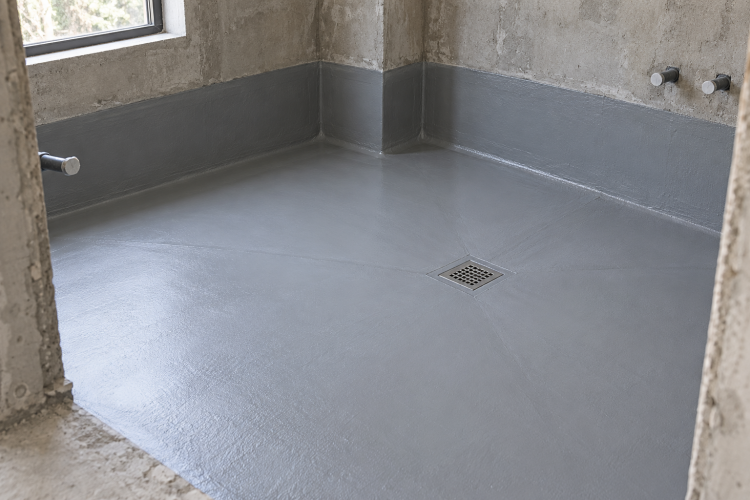 Why Proper Bathroom Waterproofing Pre-Tiling Matters
Bathroom waterproofing applied before tile installation is not a standalone task—it is the foundational moisture barrier that protects structural substrates, adjacent spaces, and long-term tile adhesion. In commercial and residential projects, failure at this stage often leads to costly rework, disputes between trades, and compromised warranty validity. For contractors and procurement teams, verifying system compatibility, substrate readiness, and documentation alignment before application begins is essential—especially when using polymer-modified cementitious waterproofing solutions.
Key Substrate Requirements Prior to Application
Successful waterproofing starts with substrate condition—not just cleanliness. Cementitious coatings require stable, load-bearing substrates with controlled moisture content and surface integrity. While specific performance thresholds depend on product formulation and project specifications, general industry expectations include:
- Concrete slabs: Confirm cure condition and substrate acceptance criteria against the project specification. The surface should be sound, dust-free, and mechanically prepared if necessary.
- Cement mortar beds: Fully set and dried; moisture content must remain within acceptable limits for cementitious coating application—always confirm with current technical guidance.
- Existing tiles or membranes: Not suitable as direct substrates unless verified compatible through technical consultation and adhesion testing.
- Crack management: Active cracks or movement joints require separate treatment—coating alone does not bridge structural movement. Control joints must be respected and detailed per design intent.
Standard Application Sequence (Two-Coat Polymer-Modified Cementitious System)
Polymer-modified cementitious waterproofing systems—including products like JS cement-based waterproof coating—are commonly applied in two cross-directional coats. However, exact layer count, thickness per coat, drying intervals, and primer requirements vary by formulation and ambient conditions. Always refer to the latest Technical Data Sheet (TDS) for project-specific instructions.
- Priming (if specified): Some formulations recommend or require a diluted primer coat to enhance interfacial bond—this is not universal and must be confirmed per TDS.
- First coat application: Apply uniformly using a stiff-bristle brush or roller. Ensure full coverage without puddling or thin spots—especially around drains, corners, and pipe penetrations.
- Second coat application: Applied perpendicular to the first, once the initial coat has reached touch-dry status (not fully cured). Film thickness verification should follow project QA protocols where applicable.
- Detailing critical zones: Reinforcement mesh or fabric may be embedded at floor-wall junctions, shower curbs, and drain perimeters if required by design or local practice. This step must be coordinated with tiling layout planning.
Inspection & Testing Points Before Tiling
Waterproofing is a concealed work item—once tiled, verification becomes impossible without destructive testing. Therefore, formal inspection before tiling is non-negotiable.
- Visual inspection: Check for pinholes, blisters, missed areas, inconsistent film build, and proper coverage at transitions.
- Water retention test (where applicable): Confirm whether a water-retention test is required by the project specification and whether the selected system is suitable for the specified exposure.
- Adhesion verification: Pull-off tests are rarely performed pre-tiling but may be mandated for high-risk or institutional projects. Coordinate timing with the coating supplier’s recommendations.
- Documentation handover: Ensure TDS, safety data sheets (SDS), and any third-party test summaries (if available) are archived and accessible to the tiling contractor.
Procurement & Supply Considerations
For distributors and project buyers, supply chain readiness directly impacts schedule adherence and quality control.
- Batch consistency: Cement-based coatings are sensitive to mix ratios and water addition. Verify that on-site mixing procedures match approved instructions—and that batch numbers are traceable.
- Packaging & storage: Dry components must be stored in cool, dry conditions away from moisture exposure. Liquid components require temperature-controlled handling. Confirm packaging format aligns with site logistics.
- Project-specific commercial arrangements: Confirm any private-label or project-specific requirements directly with the supplier.
- Commercial terms: Confirm current order, delivery, and packaging arrangements directly with the supplier for the required project scope.
Limits & Coordination Notes
This guide reflects general industry practice for polymer-modified cementitious waterproofing. It does not constitute product certification, compliance endorsement, or performance guarantee.
- Coating performance—including crack bridging, abrasion resistance, or chemical resistance—is formulation-dependent and must be validated against current TDS and project requirements.
- No universal curing time applies: drying, initial set, and full cure depend on temperature, humidity, film thickness, and ventilation. Never assume fixed timelines.
- Tiling adhesive selection must be compatible with the cured waterproofing layer. Some thin-set mortars require extended open time or modified polymer content—verify compatibility before specification.
- Drain integration, slope verification, and waterproofing-to-drain transition details must follow plumbing and architectural drawings—not generic guidance.
Next Steps for Contractors and Buyers
Before initiating any bathroom waterproofing scope:
- Obtain and review the latest Technical Data Sheet and Safety Data Sheet for the selected coating system.
- Confirm substrate readiness with the structural or finishing contractor responsible for the base layer.
- Align waterproofing detail drawings with tiling layout plans—especially for linear drains, niche placements, and threshold transitions.
- Contact the coating supplier to verify availability, packaging options, and technical support access for your region.

