

 English
 简体中文
 Español
 Deutsch
 Français
 Bahasa Indonesia
 Malaysia
 Português
 Русский язык
 بالعربية
 Kiswahili
 বাংলা
 Understanding the Core Distinction
Polymer cement waterproof coatings—often referred to as JS (Ji Shui) coatings in Asian markets—are hybrid systems combining cement, fine aggregates, and synthetic polymers (e.g., acrylic, styrene-butadiene, or VAE). The 'one-component' and 'two-component' designation refers strictly to how the system is supplied and prepared prior to application:
- One-component (1K): Pre-mixed, ready-to-use paste or slurry. Requires only addition of clean water before application.
- Two-component (2K): Supplied as separate parts—typically Part A (polymer emulsion/liquid) and Part B (cementitious powder). Requires precise volumetric or weight-based mixing immediately before use.
Formulation & Chemistry Implications
The physical separation in 2K systems preserves polymer integrity during storage, preventing premature coalescence or hydrolysis that can occur in water-rich 1K formulations over time. This often translates to more consistent polymer film formation post-curing. In contrast, 1K systems rely on stabilizers and rheology modifiers to maintain shelf life, which may influence open time and final film elasticity.
Both types achieve waterproofing through dual mechanisms: (1) pore blocking via hydration products and micro-aggregates, and (2) continuous polymer film formation across the substrate. However, the degree of film continuity—and its ability to bridge non-structural hairline cracks—is highly dependent on mix accuracy, ambient conditions, and substrate preparation.
Application Workflow Differences
For project execution, the distinction impacts labor planning, site logistics, and quality control:
Factor One-Component (1K) Two-Component (2K) Mixing Requirement Water addition only; no ratio calibration needed Strict Part A:Part B ratio required; deviation risks under-curing or brittleness Working Time (Pot Life) Typically 2–4 hours after water addition Generally shorter—60–90 minutes post-mixing; sensitive to temperature/humidity Application Temperature Range Broad (5–35°C); less sensitive to low-temperature slowdown Narrower optimal range (10–30°C); polymer emulsion may coagulate below 5°C Recoat Interval Usually 4–6 hours (depends on ventilation and humidity) Often requires full cure (24+ hours) before second coat due to interfacial bonding needsPerformance Considerations for Specification Teams
Neither 1K nor 2K systems are universally superior—the optimal choice depends on project-specific constraints:
- Crack Bridging: 2K systems generally offer higher elongation (often 150–250% reported in third-party test summaries) when mixed and applied correctly, supporting better accommodation of thermal or settlement movement. 1K systems typically range 80–180%, varying by formulation.
- Adhesion to Substrates: Both require sound, clean, dampened concrete or mortar substrates. 2K systems may deliver marginally higher bond strength on low-absorption surfaces (e.g., polished concrete or repaired areas), provided surface profiling (e.g., light abrasion or primer) is performed.
- Chemical Resistance: Neither type is intended for prolonged immersion in aggressive chemicals (e.g., acids, solvents, or high-concentration alkalis). For wastewater containment or industrial floors, additional protective topcoats or alternative systems (e.g., epoxy or polyurethane membranes) should be evaluated separately.
- UV Exposure: Both are not UV-stable long-term. If exposed to direct sunlight post-application (e.g., on podium decks without screed or tile overlay), a UV-resistant protective layer is required regardless of component count.
Procurement & Supply Chain Factors
Distributors and procurement officers should consider the following when sourcing:
- Packaging & Shelf Life: 1K products are commonly packed in sealed pails (e.g., 15–20 kg), with typical shelf life of 6–12 months if stored cool and dry. 2K systems are packed separately—liquid in HDPE containers, powder in moisture-proof bags or buckets—each with individual shelf life statements. Combined shelf life is governed by the more perishable component (usually the liquid).
- MOQ & Logistics: 2K systems often involve dual SKUs per project batch, increasing inventory complexity and requiring coordinated delivery. 1K simplifies warehousing and reduces risk of partial stockouts.
- OEM & Customization: While both formats support OEM branding, 2K systems impose stricter quality control on raw material consistency—especially polymer emulsion viscosity and solids content—which affects batch-to-batch reproducibility.
Substrate Preparation: Non-Negotiable for Either Type
Regardless of component count, failure most frequently originates from inadequate substrate readiness—not product selection. Critical steps include:
- Removal of laitance, oil, dust, and curing compounds via mechanical abrasion or high-pressure water jetting;
- Repair of cracks >0.3 mm with flexible cementitious repair mortar;
- Moisture conditioning: substrate must be saturated surface-dry (SSD), not pooling or dusty;
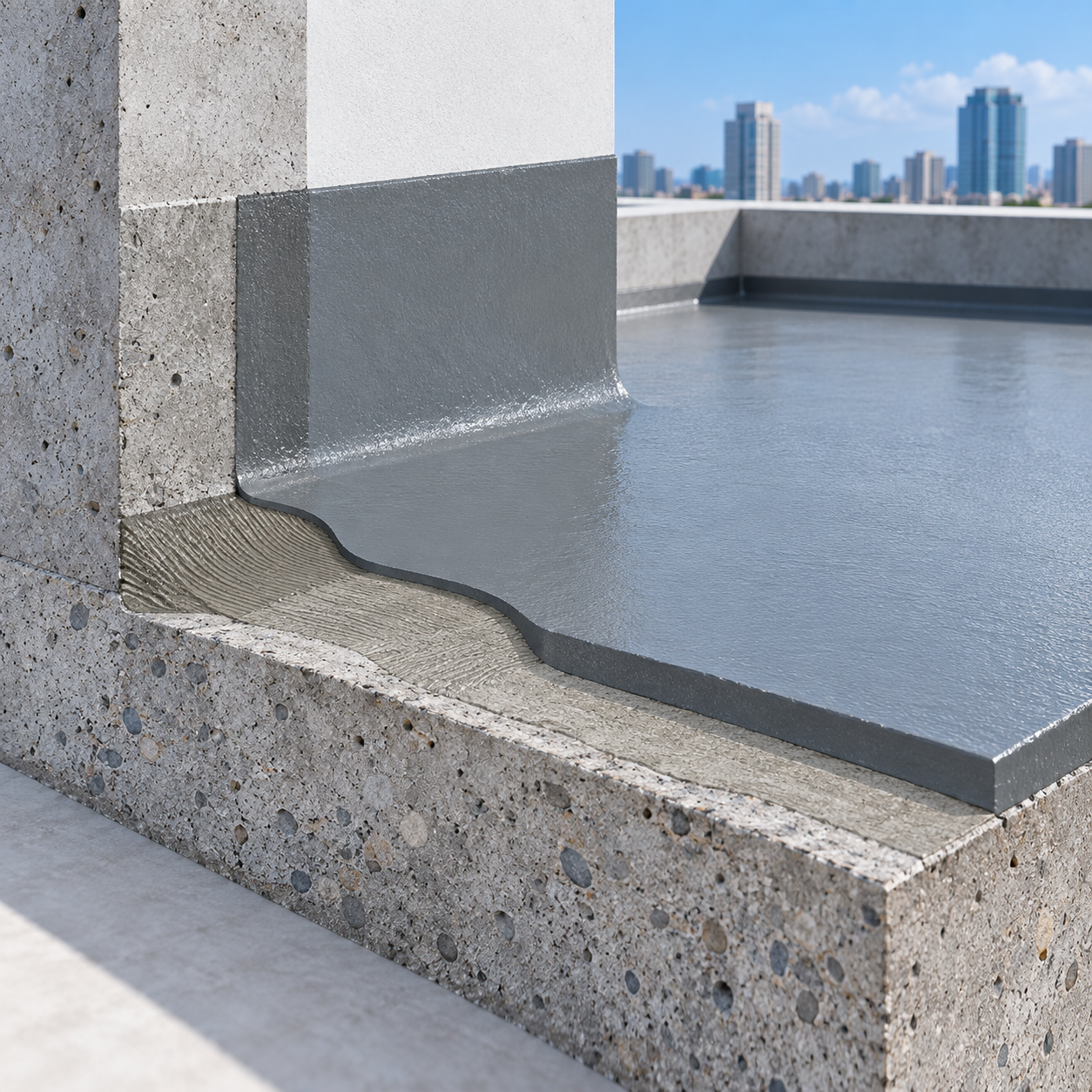
- Corner detailing: internal angles require rounded fillets (R ≥ 25 mm) and localized reinforcement (e.g., polyester mesh).
When to Specify Which System?
Prefer one-component where:
- Site labor has limited technical training on ratio-based mixing;
- Small-scale or intermittent applications (e.g., retrofit bathroom waterproofing) make pot-life management difficult;
- Storage space or climate control is limited (e.g., tropical warehouses without air conditioning).
Prefer two-component where:
- Projects demand verified high-elongation performance (e.g., over structural joints or lightweight concrete slabs);
- Contractors have trained applicators and calibrated mixing equipment;
- Specifiers require documented mix compliance (e.g., via batch tickets or on-site ratio verification).
For reference, YSROOM offers both formats: the two-component JS cement coating and the JS cement-based waterproof coating. Technical data sheets, safety information, and packaging specifications are available upon request for project evaluation.

